Fromage Bleu de Sassenage : présentation
Le fromage Bleu de Sassenage tire son nom du lieu de sa production au départ. Il est connu également sous le nom de Bleu du Vercors. Le fromage Bleu de Sassenage est l'un des bleus les mieux connus depuis la fin du XVI ème siècle. Olivier de Serres le cite dans son Théâtre d'agriculture et de ménage des champs (1600); en spécifiant que les meilleurs sont fabriqués avec un mélange de lait de vache, de chèvre et de brebis (les essais pratiqués ne sont pourtant guère concluants). Diderot en fait également mention dans l'Encyclopédie. Quant à Joseph Berchoux, poète gourmand et bachique du début du XIXème siècle, il écrivait en 1805 quelques vers le louant. Le Bleu de Sassenage fut reconnu produit local en vertu d'une charte promulguée le 28 juin 1338 par le baron Albert de Sassenage, et autorisant les habitants de Villard-de-Lans à vendre librement leur fromage. On est même fondé à croire que celui-ci fut, comme beaucoup d'autres, inventé par les religieux d'une abbaye alors située non loin du lieuoù il est toujours fabriqué. On assure même que le sassenage est l'archétype des bleus du Haut-Jura, qui en ont la forme et la pâte persillée. Il a été reconnu appellation d'origine controlée en 1998.
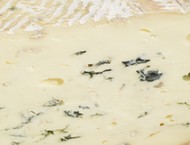
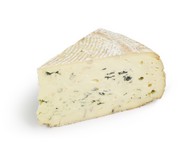
Le fromage Bleu de Sassenage a la forme d'un disque épais à talon convexe et pèse de 3,5 à 6 kilogrammes. Son affinage est de deux mois en cave fraîche et humide.
Choix à l'aspect du fromage Bleu de Sassenage : croûte assez lisse, sans gerçures.
Choix à l'odeur du fromage Bleu de Sassenage : légère odeur de moisissures/
Choix au toucher du fromage Bleu de Sassenage : pâte souple.
Choix au goût du fromage Bleu de Sassenage : peu sapide avec de l'amertume.
Histoire du fromage : Bleu de Sassenage
On trouve des traces de l’origine du fromage Bleu du Vercors-Sassenage sur le Massif du Vercors depuis le Moyen-Âge. Le relief et le climat du Vercors ne permettant pas au lait d’être transporté, les paysans le transforment en fromage appelé « Bleu dit des Monts de Sassenage » ou encore fromage de Sassenage, à cause du Seigneur de Sassenage qui, propriétaire des quatre paroisses de Lans en Vercors, Villard de Lans, Méaudre et Autrans, en avait fait un impôt. De ce fait, il collectait les fromages et les vendait pour son propre compte à Sassenage, bourgade qui gardait l’accès des montagnes de Sassenage sans participer à la production du fromage.Ce droit exclusif du Seigneur prend fin au 14ème siècle avec la Charte du Baron Albert de Sassenage qui autorise les producteurs à vendre leurs fromages en toute liberté. C’est alors que le fromage commence à se faire connaître à l’extérieur de sa zone de production.Au fil des siècles il fera l’objet d’un commerce important. Les coquetiers qui ramassent les produits du Vercors, vendent le fromage de Sassenage à des épiciers sur les marchés de Grenoble et aussi à des commerçants qui le commercialisent en France et à l’étranger et contribuent à sa notoriété. La fabrication traditionnelle à la ferme se maintient jusqu’au début du 20ème siècle, mais régresse vers 1920 au profit des ventes de lait sur Grenoble grâce au tramway partant de Villard de Lans, et la transformation dans les fruitières dirigées par des fromagers Savoyards.Il faut attendre plus d’une dizaine d’années pour qu’un laitier Savoyard, à la demande des habitants qui n’arrivent pas à oublier leur fameux Bleu, s’engage dans la fabrication de ce fromage en adaptant la recette traditionnelle jadis utilisée par les fermiers. C’est le début de la fabrication en laiterie.La demande de reconnaissance déposée en 1993 par le Syndicat de Défense incite les paysans du Vercors à se lancer à nouveau dans la difficile fabrication fermière, avec le concours d’Ecoles de Laiterie. Et c’est en 1998 que l’Appellation d’Origine est accordée. La dénomination retenue est « Bleu du Vercors-Sassenage » pour tenir compte de l’évolution historique qui étend le nom de « Vercors « au territoire jadis connu sous l’appellation « Montagnes de Sassenage ».
Extraits du cahier des charges AOC Fromage Bleu de Sassenage
Le Bleu du Vercors-Sassenage a été reconnu Appellation d’Origine Contrôlée par le décret du 30 juillet 1998. 35ème AOC fromagère reconnue en France, son aire géographique se réduit, à l’intérieur du Massif du Vercors, à une zone très restreinte limitée à 27 communes situées dans les départements de l’Isère et de la Drôme. Le Bleu du Vercors-Sassenage est la seule Appellation d’Origine fromagère entièrement incluse dans un Parc naturel Régional, en l’occurrence celui du Vercors, ce qui explique que sa zone de production soit d’une rare homogénéité. Le label AOC garantit, au sein d’un cahier des charges rigoureux, la tradition et le savoir-faire. Il comporte les points suivants :
Troupeau :
Seules trois races de montagne aux qualités fromagères reconnues sont autorisées : Montbéliarde, Abondance et Villarde.
Alimentation :
L’été les animaux sont au pâturage, l’hiver ils sont nourris de foin et d’herbe récoltés pendant la belle saison. Tous les fourrages sont issus du périmètre AOC. Sont interdits l’ensilage, tous les aliments qui peuvent influer sur le goût, l’odeur du lait ou qui présentent des risques de contamination. Le maximum de la ration doit être produit sur la zone afin de conserver le lien étroit qui unit l’animal, le terroir et la spécificité du produit AOC.
Fabrication du fromage Bleu de Sassenage :
Le cahier des charges garantit le respect de la recette traditionnelle. Le lait utilisé doit provenir uniquement de la zone. Le Bleu du Vercors-Sassenage est aujourd’hui le seul fromage fabriqué à la ferme à partir d’un mélange de lait de la veille que l’on fait chauffer puis refroidir et auquel on ajoute le lait cru et chaud du matin dans une proportion de 30 à 50%. En laiterie,l’ajout de ferments ensemence le lait de manière équivalente à ce qui se faisait aux 18ème et 19ème siècles avec l’addition de 10 à 25% de lait cru. Elle reproduit, en les transposant, les usages, de la fabrication à la ferme.
Retrouvez toute l'information sur le fromage du Vercors :
- Bleu du Vercors-Sassenage
- Livron-sur-Drôme
- Picodon
- Picodon de Dieulefit
- Romans
- Saint Marcellin
- Saint Félicien
- Tomme du Diois
- Tomme de Crest
- Tomme du Vercors
 Vins associés
 Fromages associés
 PT
PT IT
IT DE
DE NL
NL SV
SV AR
AR RU
RU HI
HI ZH
ZH JA
JA


 Dégustation